Killed Women is an organisation and network for the bereaved families of women who were killed by men in the UK. We work to protect women’s lives and ensure justice, both in the present and for future generations.
A woman is killed by a man every three days in the UK.
They are our daughters, sisters, mothers and loved ones.
But we are not after sympathy - what we want is change.
-
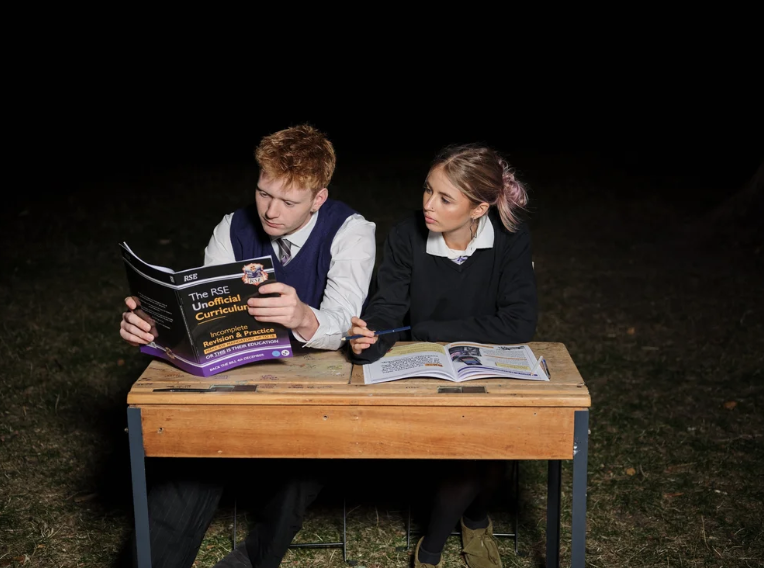
RSE to 18: The Unofficial Curriculum
Make It Mandatory & Killed Women have launched 'The RSE Unofficial Curriculum’, exposing the reality of teenage education when the curriculum isn’t mandated.
● Make It Mandatory is demanding MPs back Alistair Strathern’s Bill to extend compulsory RSE up to age 18 ahead of its second reading on 4th December.
● ‘Mind The (sex education) Gap’: With the dangerous rise of the manosphere and incel culture, there has never been a more critical time for the Bill to be passed, and the curriculum taught.
● To spotlight the education gap, the youth-led campaign group has partnered with Killed Women to launch 'The RSE Unofficial Curriculum' – a mock textbook revealing what harmful content can fill the void when compulsory RSE ends at 16.
● Unveiled today to MPs at Parliament Square Gardens, the book highlights the damaging material young people are learning from, in place of formal education, from violent pornography and online misinformation to messages normalising coercive control and abuse.
To read 'The RSE Unofficial Curriculum' and access a template to use to write to your MP, use the link below.
-
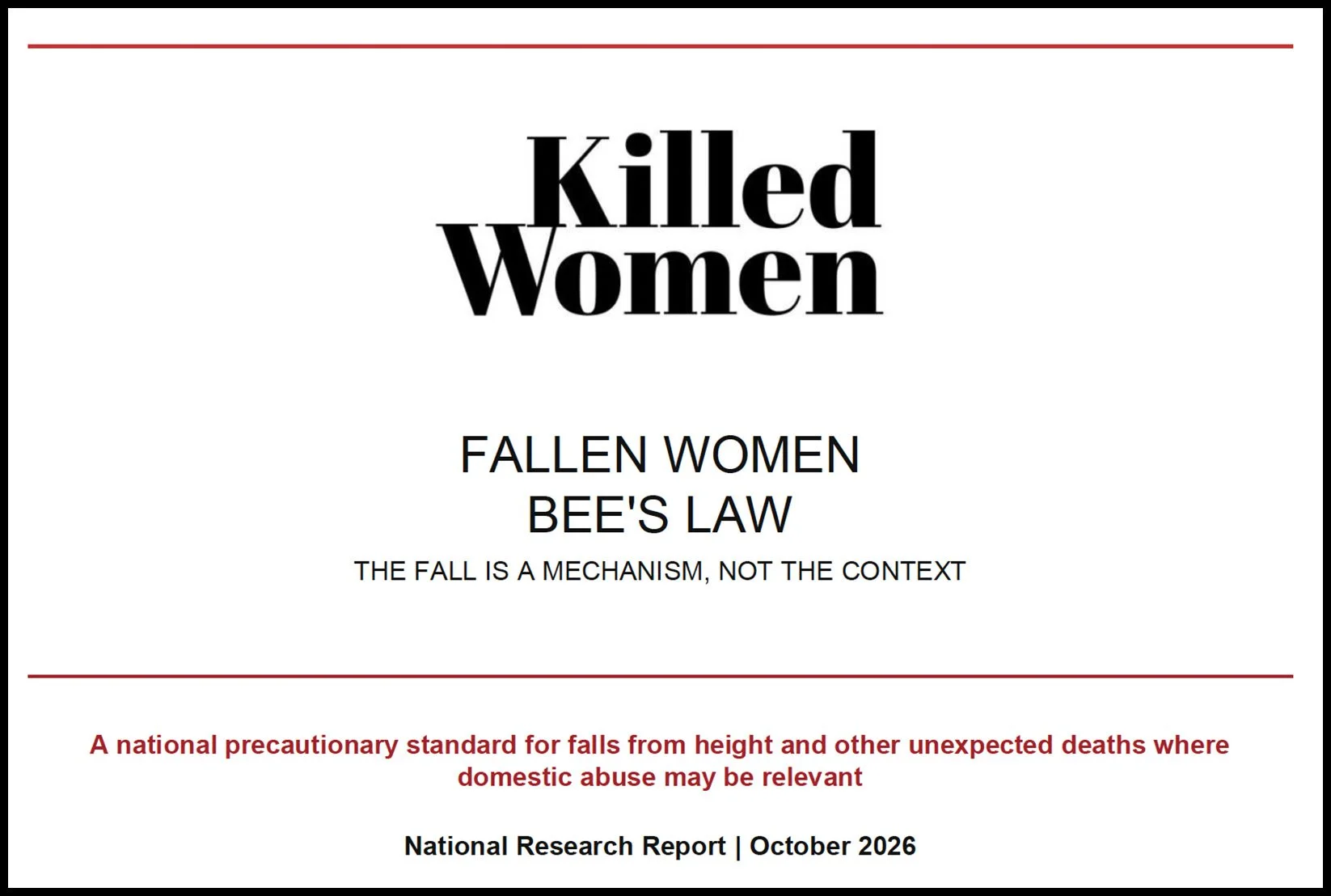
Fallen Women – Bee's Law
We are proud that KW co-founder Jhiselle Feanny features in Stacey Dooley’s Fallen Women. This important BBC documentary shares the story behind our Fallen Women campaign and Jhiselle’s years of work seeking answers and change following the death of her sister, Bianca ‘Bee’ Thomas. It explores the deaths of women following falls from height, the potential role of domestic abuse and the questions that can arise about how these deaths are investigated.
To coincide with the broadcast, we have published our new 24-page national report, ‘Fallen Women – Bee’s Law’, led and authored by Jhiselle. Drawing on national policing data and new Freedom of Information research, the report sets out the case for a consistent, precautionary investigative response where domestic abuse might be involved.
● ‘Bee’s Law’: A national precautionary standard for falls from height and other unexpected deaths where domestic abuse may be relevant.
“The fall is a mechanism, not the context.
Women have been falling from height since the dawn of time. The context has too often gone unexplored and misunderstood – until now.”● The recommendation: Implement Bee’s Law now as a national operational policing standard, beginning with deaths following a fall from height where domestic abuse is known, suspected or cannot reasonably be excluded. Legislative or code-based underpinning can develop in parallel; the core safeguards should not wait for a pilot.
-
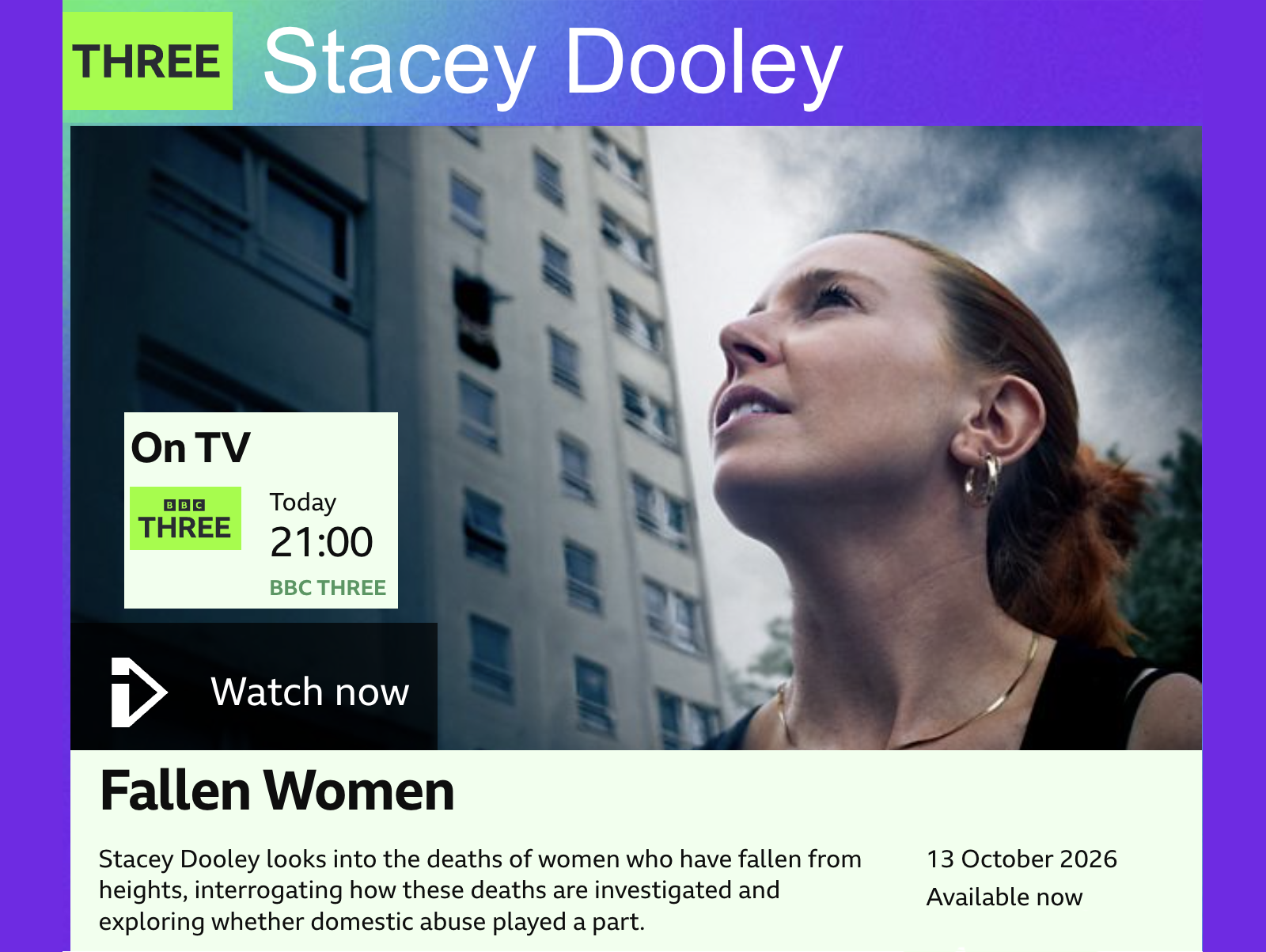
Fallen Women: Stacey Dooley Documentary
Stacey Dooley’s Fallen Women was broadcast on BBC Three on 13 October 2026.
Killed Women are proud that KW co-founder Jhiselle Feanny features in this important BBC documentary, sharing the story behind our Fallen Women campaign and Jhiselle’s years of work seeking answers and change following the death of her sister, Bianca ‘Bee’ Thomas.
The documentary explores the deaths of women following falls from height, the potential role of domestic abuse and the questions that can arise about how these deaths are investigated.
“The fall is a mechanism, not the context.
Women have been falling from height since the dawn of time. The context has too often gone unexplored and misunderstood – until now.” -
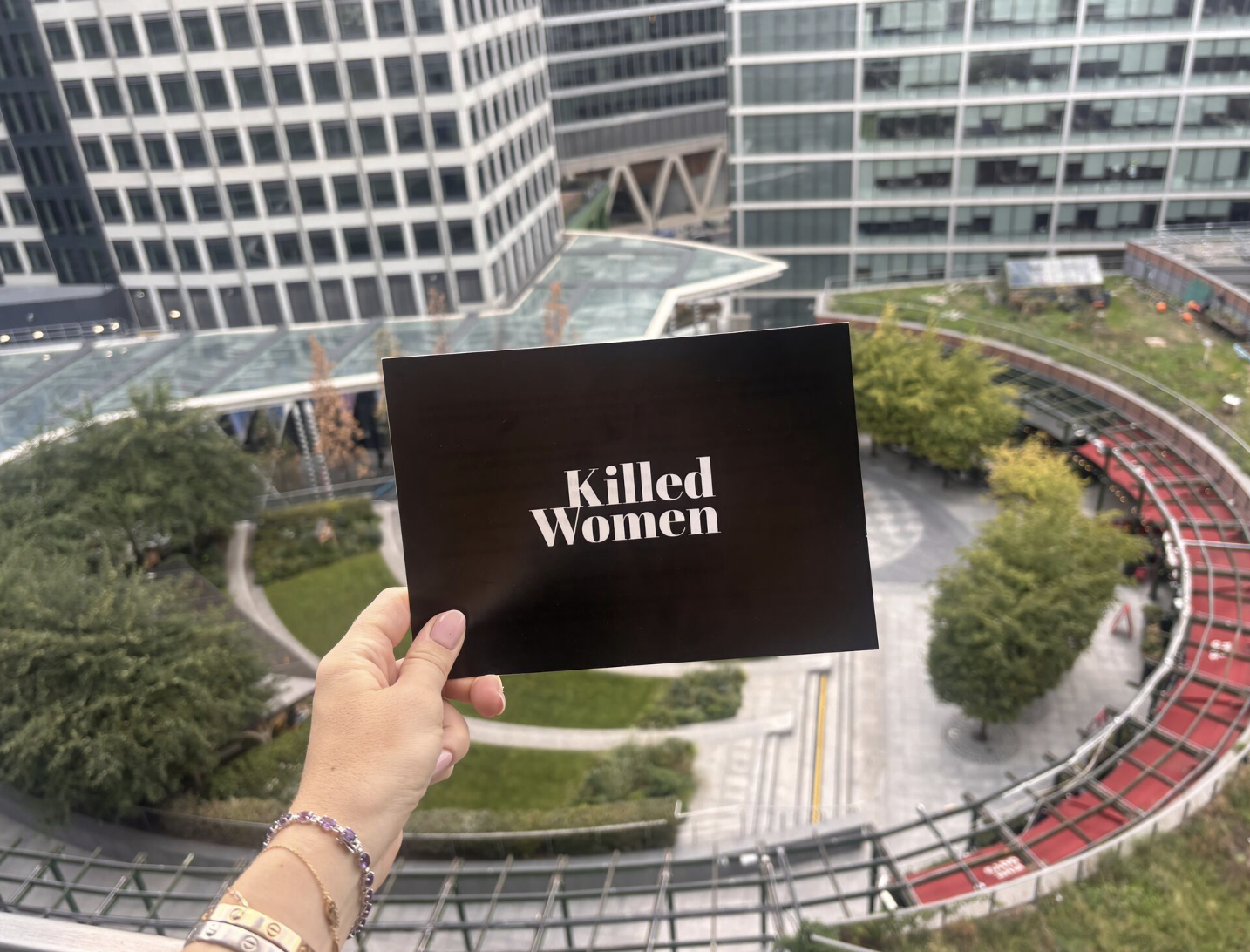
Male Allyship: Hard Hats & Open Minds Charity Walk
A number of Killed Women families spent an emotional – but positive – day in London on Tuesday 15 September, when they joined almost 200 people from the construction industry on the LMG Hard Hats & Open Minds 10k Charity Walk (with support from Walksafe and The House of Sisters Grimm).
We walked, we talked, raising funds for KW, spreading awareness of VAWG and reinforcing KW's message about the importance of male allyship in combating it.
Together we create change.
____________________
"Today’s walk has been organised by LMG, who are working to make construction a more inclusive industry and to encourage more women to see it as a place where they can belong and thrive.
As we walk together, we also remember the women whose lives have been taken through male violence, and the families left behind carrying that loss.
Every woman deserves the opportunity to live, work and contribute her talents free from fear and abuse.
Ending violence against women and girls is everyone’s responsibility. Men have the power to lead by example, challenge harmful behaviour and speak out when something isn’t right.
Speak up. Step up. Shut down abuse.
We encourage men to learn about abuse, become active allies, and help set the standard for attitudes and behaviours that keep women and girls safe."
____________________
Jhiselle Feanny, who developed and led the Hard Hat and Open Minds campaign for Killed Women: “Having organisations such as male-dominated construction businesses come out and walk, and honour, to show solidarity and allyship, is just really incredible.”
Layla Coe, KW CEO: “For us, having LMG put their energy behind our cause, it really means the world.”
-
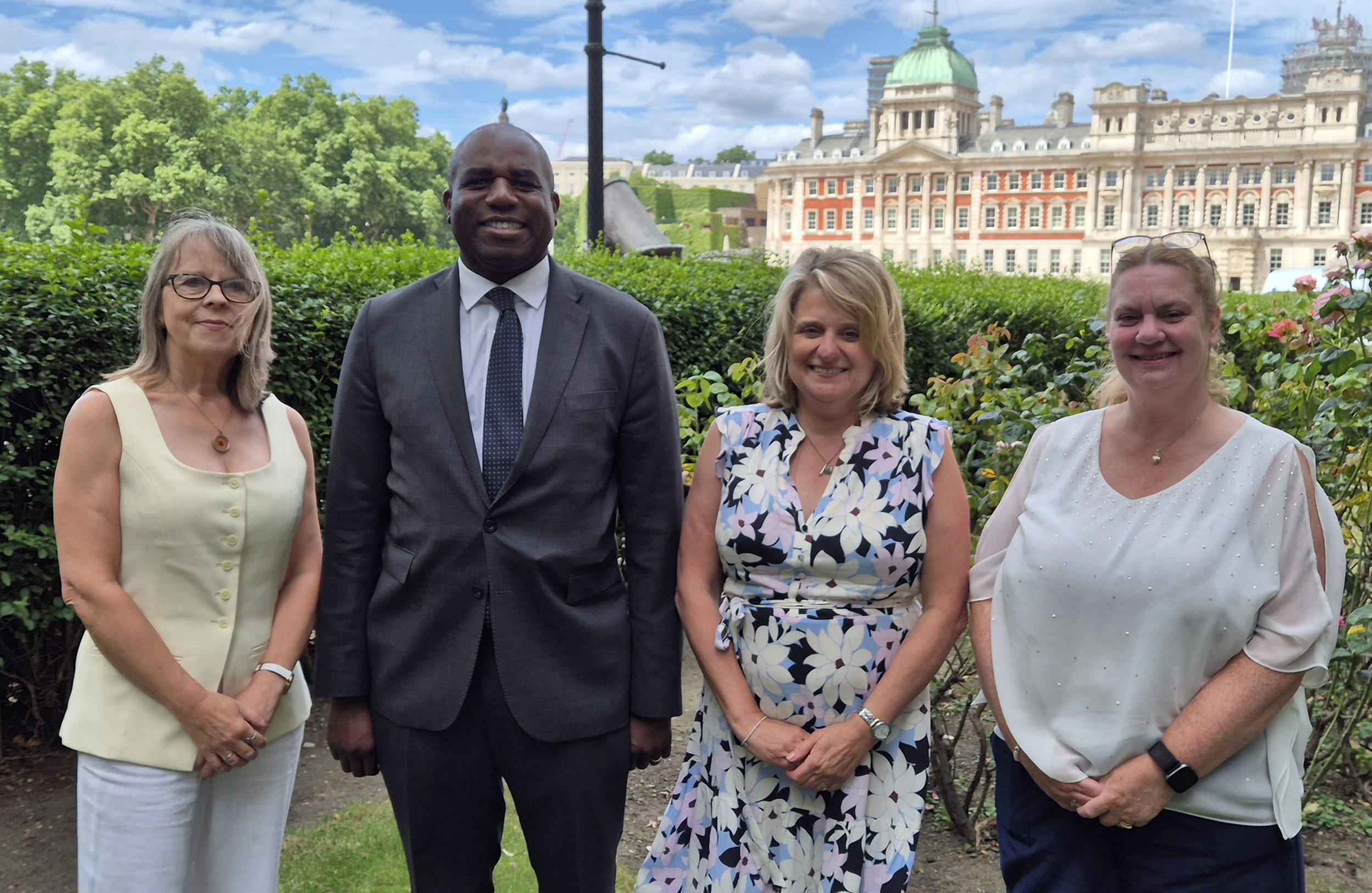
Justice For Our Women: KW's response to the DPM's announcement on sentencing
We, Carole Gould, Julie Devey and Elaine Newborough, the mothers of three young women brutally killed in their homes by former partners, thank the Lord Chancellor for announcing this important legal change, which finally aligns the starting point for murders committed in the home with those committed in the street.
At last, women’s lives are being valued as highly as men’s. Since around most 70 per cent of victims of homicide in the home are women, it has long been unjust that those who murder them routinely receive substantially lighter sentences simply because the murder weapon, such as a kitchen knife, was already there rather than brought to the scene.
We have been campaigning relentlessly on this issue for seven years, to persuade the State just how dangerous these men are. We have lost our daughters – Poppy, Ellie and Megan – to such men. Anyone who can murder someone they once loved – often the mother of their children – using such extreme violence is clearly a serious threat, not only to other women but to the public. We welcome the Government’s decision to keep these perpetrators in prison for longer, as an important step towards protecting women and to achieving their promise to halve violence against women and girls within a decade.
To make our case we have had many meetings in Parliament, with the VAWG sector and with those who work in Criminal Law. We feel that finally, after lots of heads being nodded and warm words spoken without action, we are seeing the fruits of our heartbreaking and unwanted labour. Over seven long years we have met with seven Lord Chancellors, each being sympathetic, but it is this Lord Chancellor, David Lammy MP, who has finally done the right thing. What drove us was knowing, categorically, that the current sentencing guidelines are wrong. Our daughters’ lives were taken in brutal ways, just as other women are killed every week inside their home, the place they were entitled to feel safe. The sentencing guidelines and statutory schedules failed to properly reflect this gross aggravating factor.
We therefore look forward to seeing the current minimum starting point of 15 years being raised to 25 years and being implemented in courtrooms as soon as possible. It is now time for judges to step up and fully recognise the dangerous nature of these murderers and to impose sentences that reflect the gravity of these crimes, in the interests of the public and of women all over the country, and in memory of our daughters – Poppy, Ellie and Megan.
-
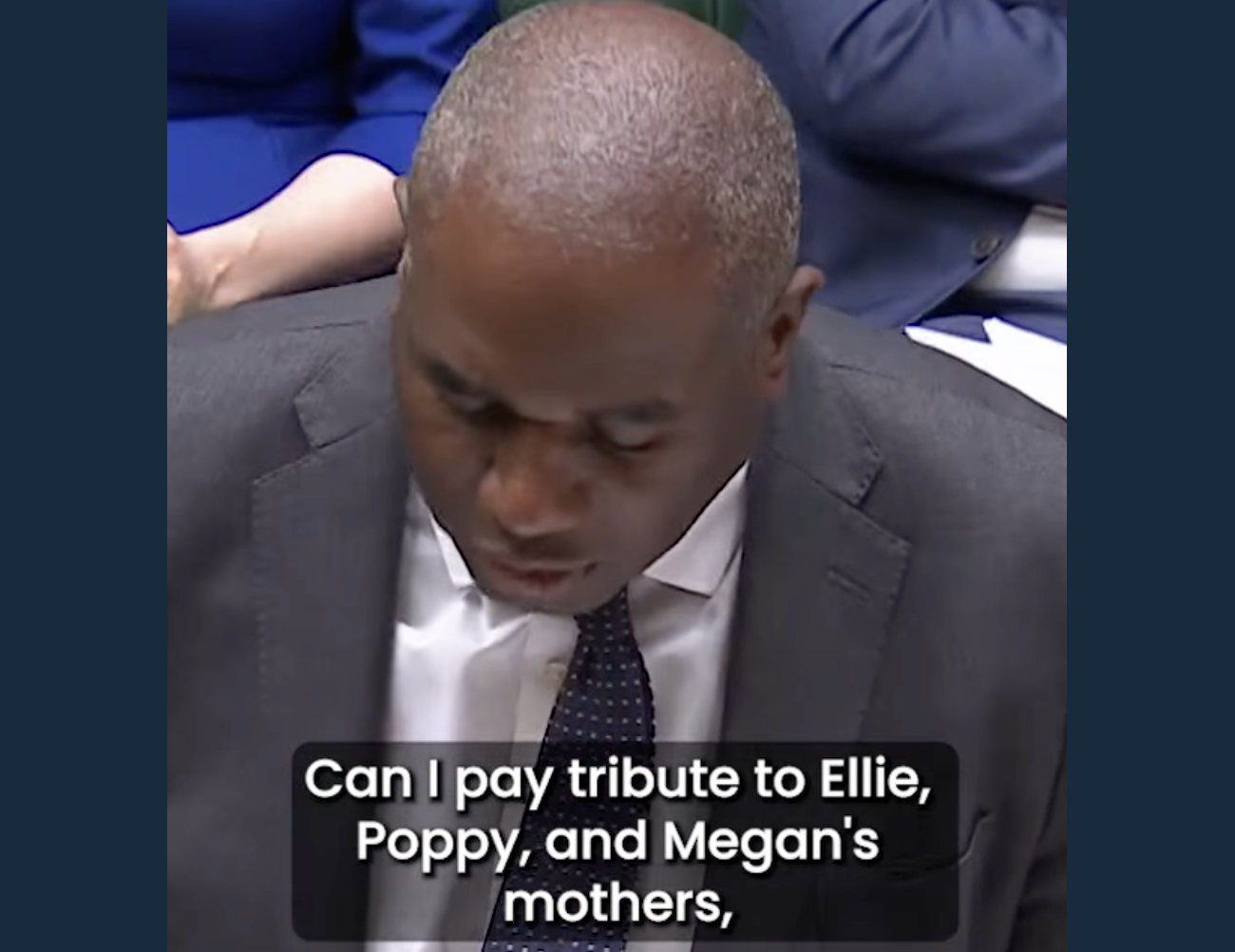
Justice For Our Women: Government announce domestic killers to face longer behind bars
‘Heinous offenders who kill their partner, or ex, could face an additional 10 years in prison, under a change announced today by the Deputy Prime Minister.
Under the current law, most domestic murders have a 15-year sentencing starting point, because they take place in the home with a weapon most likely already at the scene. However, for other murders where a weapon is taken to the scene with intent, the starting point is 25 years.
The Government has announced today (30 June) it intends to close this 10-year gap so that domestic murders are dealt with the same severity as other murders - regardless of whether they happen at home or anywhere else. Domestic murders are among the most devastating crimes and often represent a culmination of prolonged trauma and abuse.
Justice Secretary David Lammy:
“For centuries, the law failed to protect women from violence at the hands of their partner – whether from marital rape or from abuse behind closed doors. Whilst we’ve made significant progress, we need to continue righting these wrongs. This change closes a long overdue gap and will ensure those who murder their partner face sentences that better reflect the devastating harm they cause.
I pay tribute to Carole Gould, Julie Devey and Elaine Newborough, whose courageous campaign will help future mothers, daughters and wives get the justice they deserve.”
More than a fifth of all murders are domestic, and overwhelmingly women are the victims in these cases. This change forms part of the Government’s commitment to halve Violence Against Women and Girls, and ensure swifter justice for victims and their families. The change will also include important safeguards to further protect victims. This means in cases where a victim of domestic abuse kills their abuser, the existing 15-year baseline starting point will still apply.
– This change to the law is subject to consultation with the Sentencing Council – This measure will be introduced as soon as possible – Further policy details, including the application to children who murder, will be outlined in due course – The new starting point will apply to future murders after the date of implementation and will not be applied retrospectively – This work is being conducted alongside the Law Commission’s review of homicide law and sentencing, to address the disparity as quickly as possible, ahead of the review’s conclusion in 2028.’
-
Law Commission Consultation
This is a public consultation by the Law Commission for England and Wales (closes 30 September 2026).
“We are conducting a review of the law of homicide and considering the need for reform to improve its clarity, coherence, fairness and effectiveness. The review is divided into three strands; homicide offences, defences (including partial defences to murder and full defences applicable to homicide) and sentencing. In this consultation we are asking questions about the homicide offences. We will hold a public consultation on defences and sentencing in future."
For more information about this project click here.
We recommend that consultees read the consultation paper on homicide offences before responding to the consultation. A shorter summary is also available. Consultees do not need to answer all the questions if they are only interested in some aspects of the consultation.”
-
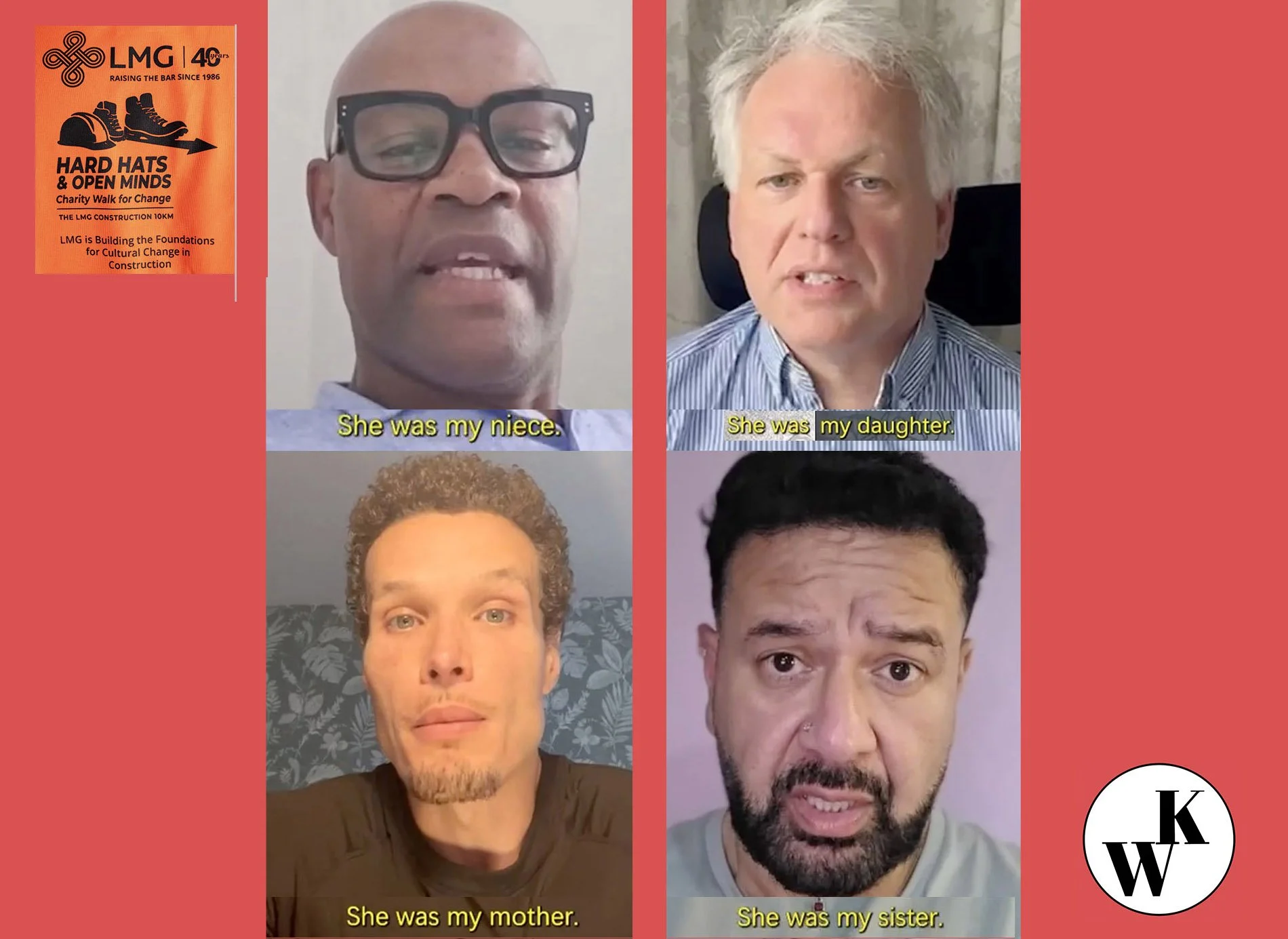
Male Allyship: Hard Hats & Open Minds
Building Allies to End Violence Against Women and Girls: Seven Men – Seven Family Members – One Shared Purpose
Violence against women and girls does not only take lives. It leaves behind fathers, sons, brothers, uncles, families and communities who carry the impact for a lifetime. Hard Hats & Open Minds launched on 25th June with a 10k walk organised by LMG and Killed Women, with support from WalkSafe and House of Sisters Grimm, urging construction workers to challenge misogyny at work and look out for warning signs that colleagues are abusing their partners at home.
The video created for the event brings together seven Killed Women family members, seven men connected by loss but united by a commitment to creating change: Leon, Anthony, Daniel, Jazz, Rupert, Zeb and Tyrell – Uncle, Fathers, Son, Brothers.
Together, they represent a powerful call for men to become allies, challenge harmful attitudes and behaviours, support bereaved families, and help create safer communities for women and girls.
Leon: “As Killed Women's Chair, I am also an uncle whose family has been forever changed by violence against women and girls. I know these tragedies do not affect individuals alone. They leave lasting scars across entire families and communities. Violence against women and girls is everyone’s issue. Through Hard Hats & Open Minds, we hope to inspire more men to become active allies and part of the solution. The construction sector has a unique opportunity to lead by example, challenge harmful attitudes and help create a culture where women and girls feel safe, valued and respected. Every woman lost leaves behind people who loved her. Every family deserves a future where those losses are prevented.”
-
Fallen Women: NCVPP Report
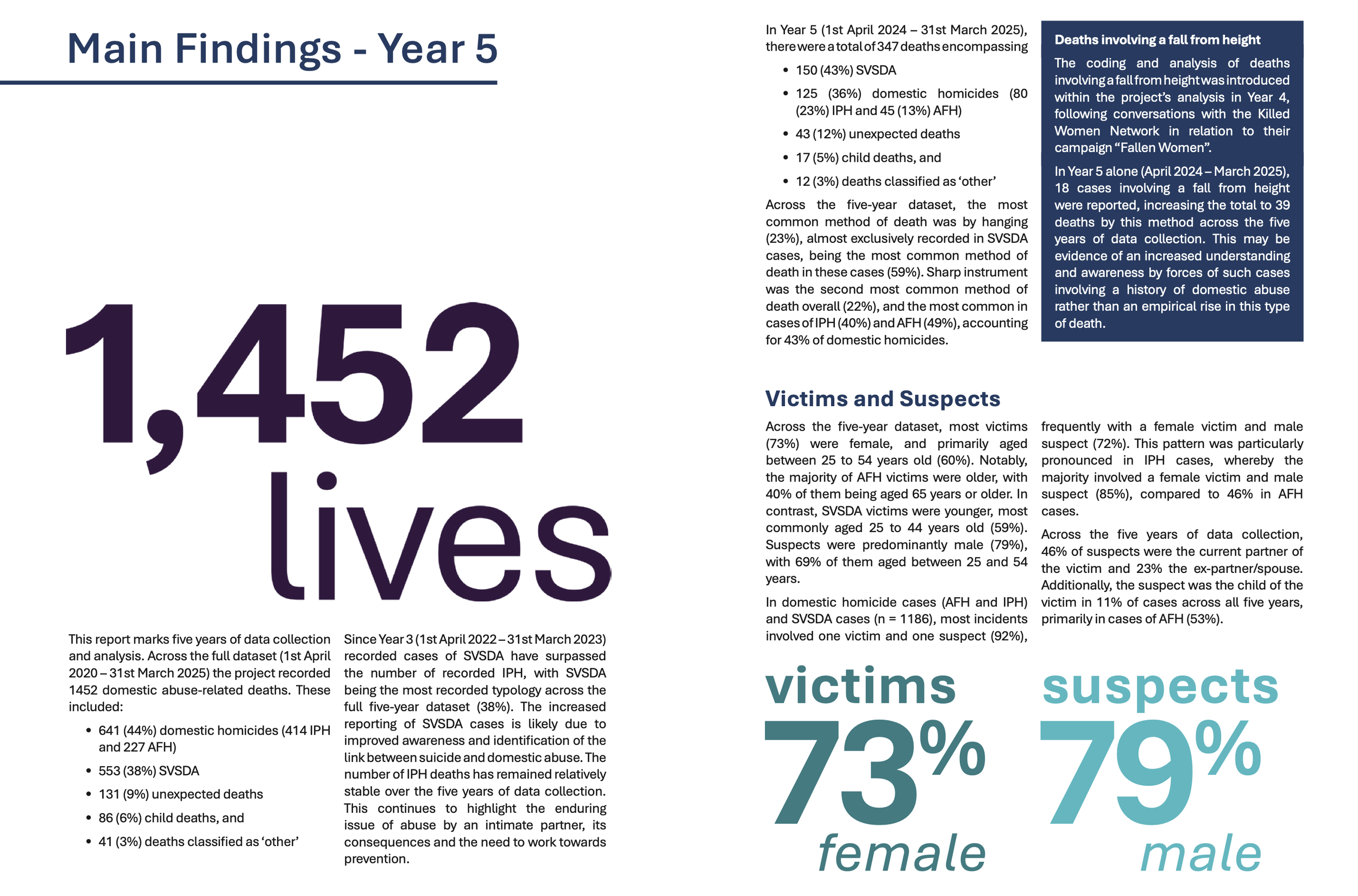
Following Killed Women's Fallen Women campaign, which launched in March 2024 and calls for the deaths of all women who have fallen from a height to be reviewed by police to identify whether domestic abuse may have been a feature, the NCVPP's annual 'Domestic Homicides and Suspected Victim Suicides Report' now contains coding and recording of deaths specifically involving a fall from height.
This year's newly published report, covering 2020–2025, states (pp. 24–6): "In Year 5 (April 2024 – March 2025) there were 18 reported cases of deaths involving a fall from height, compared to 21 victims (associated with 22 suspects) reported in updated figures covering the previous four-year period (April 2020 to March 2024, excluding one case of child death). Therefore, across all five years there were 39 victims reported to have died following a fall from height, accounting for approximately 3% of deaths overall (1452)".
The report states: "The analytical focus on this method of death and requests to forces to submit these cases are likely to have improved understanding and awareness of such cases involving a history of domestic abuse."
-
Justice For Our Women: NCVPP Report
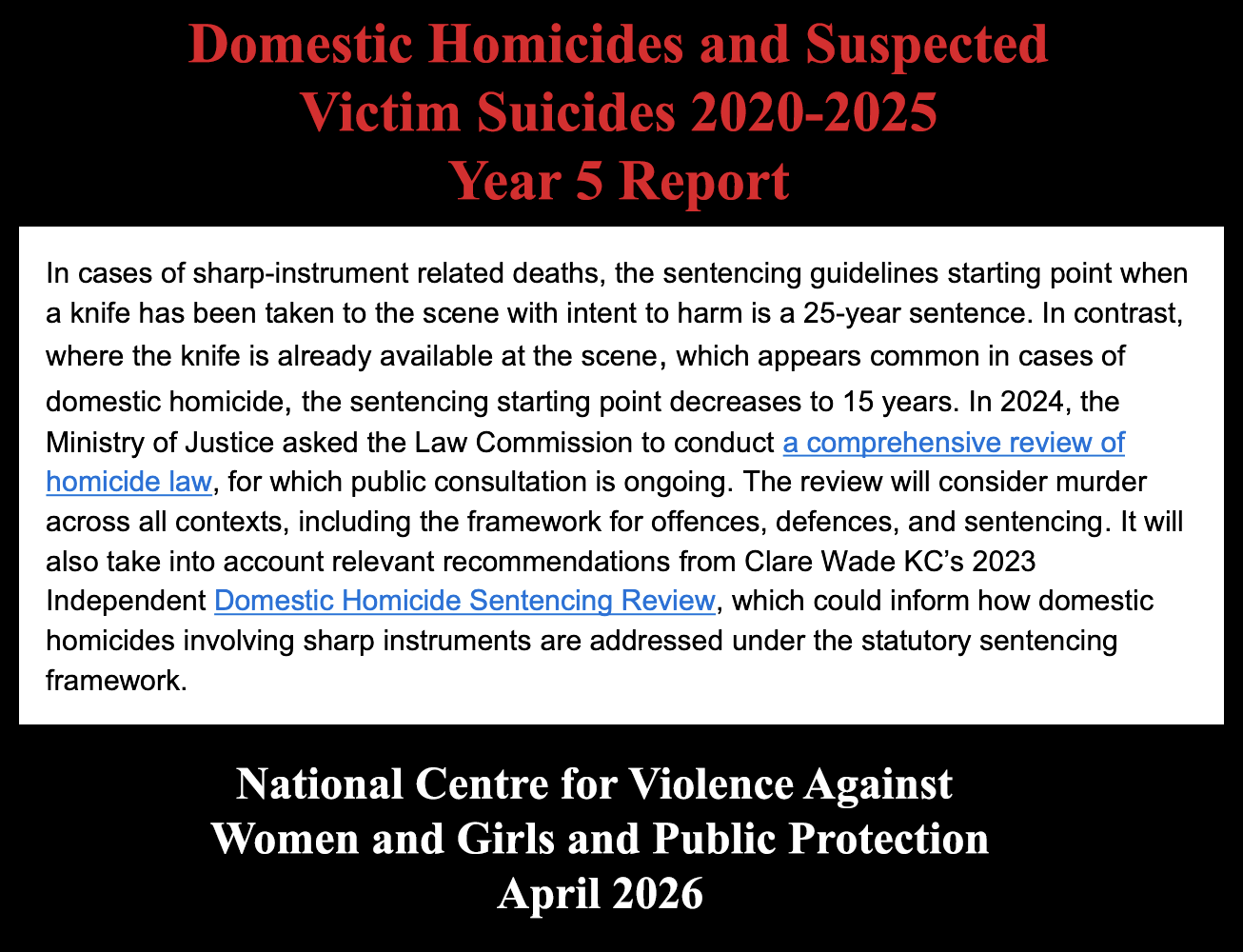
The NCVPP's 'Domestic Homicides and Suspected Victim Suicides Report Year 5' refers (p. 22) to the ongoing review into sentencing being carried out by the Law Commission (like the Wade Review, commissioned by the government as a direct result of KW's campaigning).
KW co-founder Julie Devey OBE comments: "The Law Commission have now almost completed phase one, the Offences section. This will then be reviewed by the VAWG sector to give input. Then they will move through sections 2 and 3. Any recommendations will then be presented to the government. This process will take until 2030 – at the earliest. It is laborious. The 10-year disparity will stay in place all that time, and in the meantime approximately 400 women will be killed, around 75% of them most likely in their own homes.
The government need to act NOW, to show their commitment to keeping VAWG at the top of their agenda. The 15-year starting point could be changed even while the review is ongoing. We want to see this brought in line with the 25-year starting point, which would begin to show equal respect to those lives taken in a domestic setting, regardless of gender.
The government and judiciary must wake up and start sentencing these 'domestic' murderers in line with other murderers."
-
Justice For Our Women: MoJ Meeting
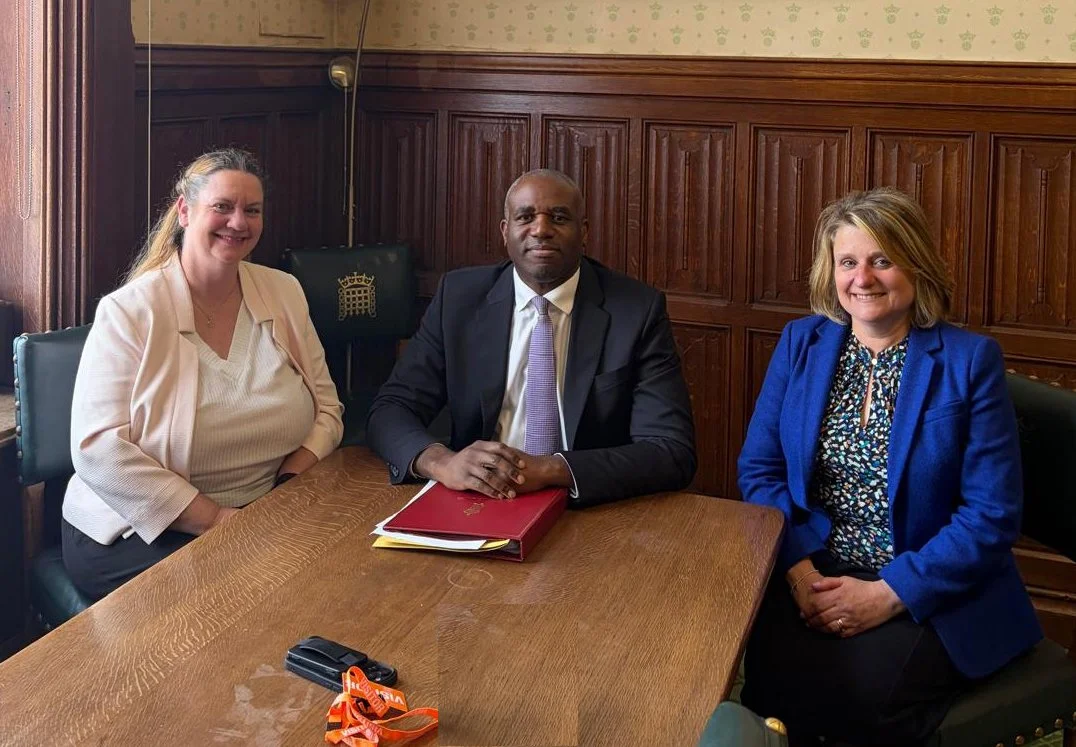
Carole Gould, Elaine Newborough and Julie Devey met on 22 April 2026 with Secretary of State for Justice David Lammy and Justice Minister Alex Davies-Jones for a useful – and hopefully productive – discussion on: ● the progress of sentencing reform; ● the take-up of aggravating factors when convicted domestic murderers are being sentenced; ● and the implementation of restrictive zones for offenders after their release.
● There is currently an unjustifiable 10-year disparity in the minimum tariff for life sentences for murder. For a murder committed when the weapon is ‘taken to the scene’ this is 25 years; for murder when the weapon is not deemed by the judge to have been ‘taken to the scene’, which seems to cover almost all murders committed within the victim’s home, and thus almost all domestic homicides, the victims of which are almost entirely women killed by men known to them (on average a shocking and unchanging 2 to 3 every week), this is just 15 years.
After years of both high-profile and behind-the-scenes campaigning by KW, different governments and ministers have promised change and instigated reviews. We pointed out that when reforms are announced but outcomes don’t alter, it demonstrates symbolic politics rather than real reform. Public trust is eroding because sentencing doesn’t reflect the seriousness of gender-based violence. This injustice needs to be changed NOW.
● The four key aggravating factors that now, after years of insistent campaigning by KW, should be taken into account at sentencing in domestic homicide cases are: history of controlling or coercive behaviour; use of sustained or excessive violence (‘overkill’); end of relationship/separation; and use of strangulation, suffocation or asphyxiation.
But these updates to the sentencing guidelines do not appear to be having the desired impact. KW presented Lammy with a list of a series of recent sentencings where the minimum term was still set at 15–16 years, with apparently little or no addition for the aggravating factors that were present in the various cases – although the judges were prepared to make reductions for guilty pleas (even when made at the very last moment, thus extending the anguish for the victims’ families) and for lack of previous convictions (although it beggars belief that this can be considered relevant once someone has committed the ultimate crime of murder). This is not good enough. It seems as though the judges need to be reminded (or educated) about the law – NOW.
● Last summer, the Government announced plans for the implementation of ‘Restriction zones’ to lock ‘the most serious sexual and violent offenders’ – not their victims – into specific areas after their release, allowing victims to travel anywhere else without fear of meeting their offender. KW urged Lammy to ensure that the wording will leave no grey areas, by specifically including murderers in the list of offenders to whom it will apply.
-
IWD 2026
International Women’s Day 2026: Families Demand Action on Violence Against Women And Girls – “We Were Here. Where Were You?”
In honour of International Women’s Day, the Killed Women network stood with bereaved families on 12th March as Parliament heard the names of women whose lives have been lost. We express our sincere thanks to Jess Phillips, Minister for Safeguarding and Violence Against Women and Girls, for reading the names of women who have lost their lives over the past year and for continuing this powerful annual tradition. Killed Women also thank the vital work of Counting Dead Women, who provide the list of names read out each year.
But we say that remembrance must also lead to action.
Killed Women call for urgent reform across CPS, policing, domestic homicide reviews and justice in sentencing in order to address the continuing national crisis of violence against women and girls, and to ensure that warning signs are acted upon before more lives are lost.
Layla Coe, CEO of Killed Women: “We thank Jess Phillips for continuing the tradition of reading the names each year. This International Women’s Day we stand with families who say: ‘We Were Here. Where Were You?’ We urge those in power to implement the recommendations in our research report Invisible Women “Made Visible” and deliver the systemic change needed to end violence against women and girls. Recognition and remembrance must now lead to reform and accountability.”
-
Invisible Women: Petition
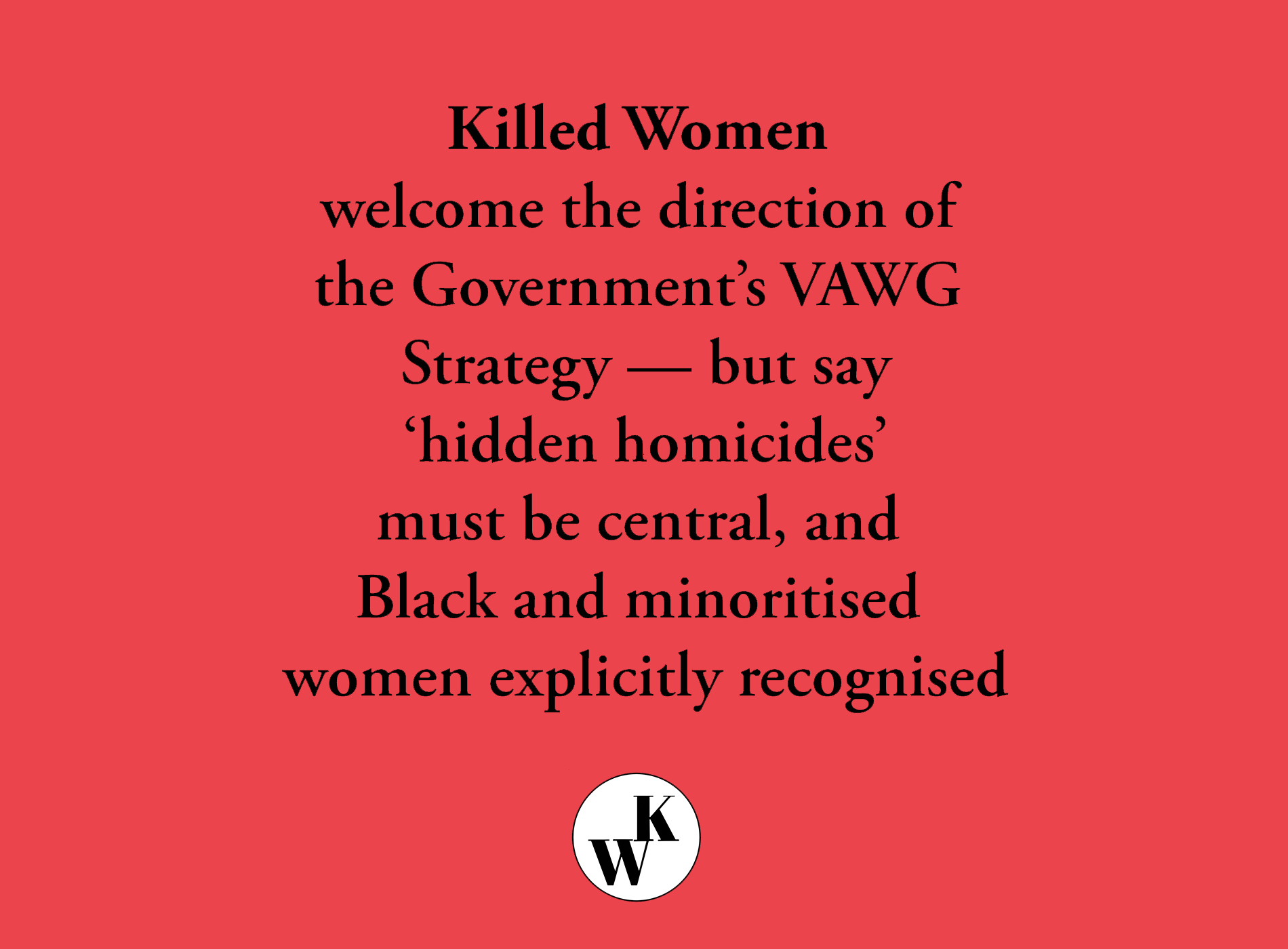
Killed Women believe it is unacceptable that Black, minoritised and migrant (BMM) women are still not explicitly mentioned and recognised as victims in the Government’s long-overdue Violence Against Women and Girls (VAWG) Strategy.
We have launched a petition on Change.org that calls on the Government to explicitly include BMM women in their VAWG Strategy.
Our report ‘Invisible Women “Made Visible”: Learning from the Femicides of Black, Minoritised and Migrant Women’, in partnership with Southall Black Sisters, shows the deadly consequences of this exclusion:
🖤 1 in 4 women killed by domestic homicide were Black, minoritised or migrant.
🖤 In London, 62% of femicide victims were Black women.
🖤 Almost every woman killed by a man in London in 2023 was from a BMM background.
These women were failed by systems meant to protect them — A VAWG strategy that ignores the women most at risk is not fit for purpose — Our loved ones should still be here.
_________________
How you can help:
● Sign our Petition ‘Make Invisible Women Visible in VAWG Strategy for BMM Women’
● Write to your MP, urging them to support our Invisible Women campaign, which confronts the systemic failures that leave BMM women experiencing abuse without protection or justice.
-
The VAWG Curriculum
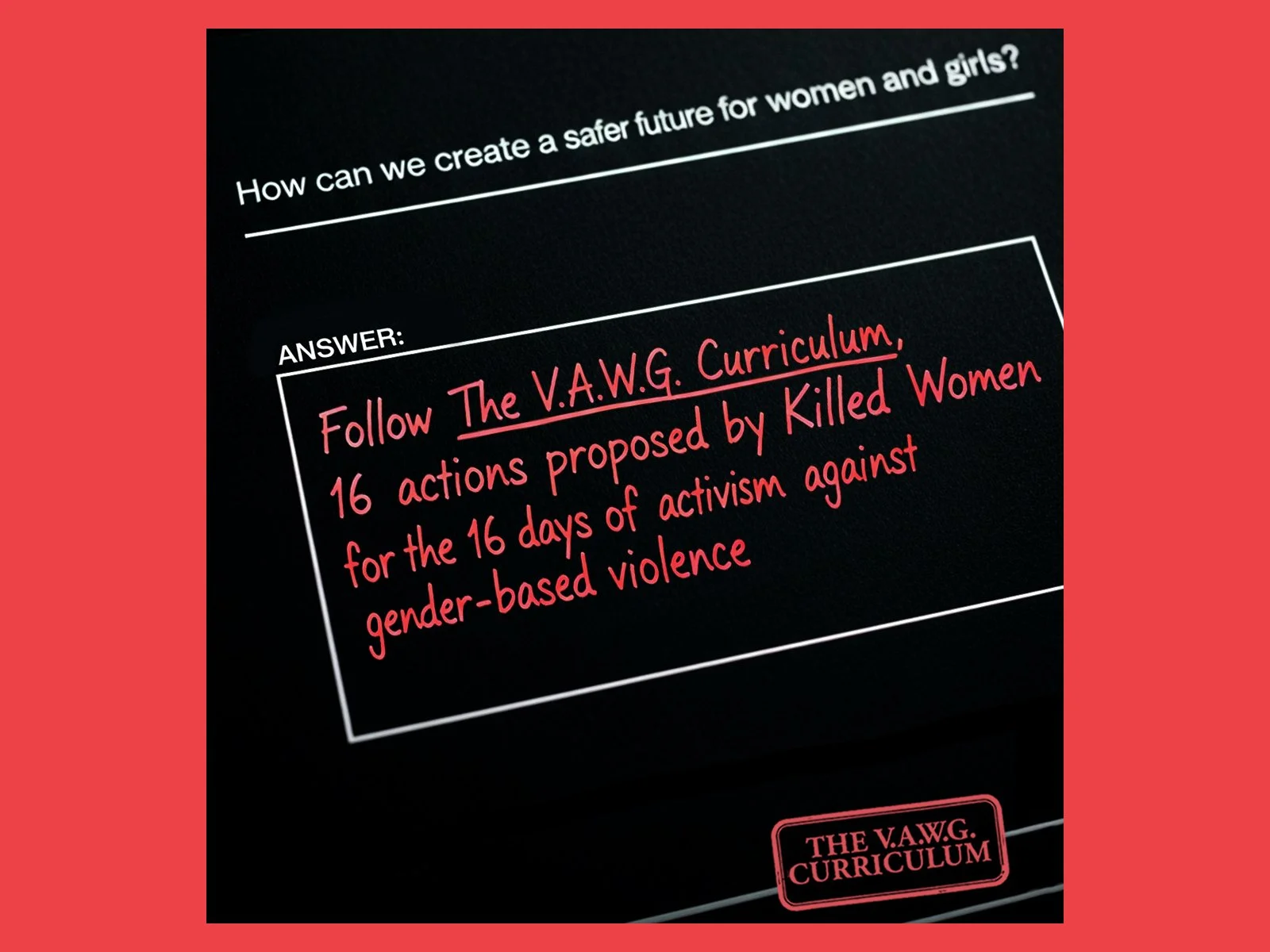
On 25 November 2025, the International Day for the Elimination of Violence against Women,
Killed Women launched ‘The VAWG Curriculum’ campaign.The campaign, which was active for the duration of the UN’s 16 Days of Activism against Gender-Based Violence, calls on the public, policymakers, educators and communities to take action today to build a safer future for women and girls.
Working in collaboration with a network of charities, influencers and partner organisations, this social media awareness campaign centres on a message of hope and prevention, with the message that violence against women and girls is not inevitable.
The campaign highlights the urgent need for action – and invites people to play their part in changing what the future looks like for the better.
————————————
16 Days of actions – for us to take together,
to tackle Violence Against Women and Girls.Please follow us on our social channels, and share our campaign: X / LinkedIn / Instagram / Facebook / Threads / Bluesky / TikTok / YouTube
For full details of our campaign, as it unfolded day by day, go to our dedicated webpage, where you will find each day’s Message, Call to Action and videos from our various contributors:
-

INVISIBLE WOMEN: We Were Here, Where Were You?
On 31 October 2025, Killed Women launched a campaign to confront systemic failures that leave Black, minoritised and migrant (BMM) abuse victims and families unprotected and without justice. The campaign — INVISIBLE WOMEN — demands accountability, visibility and systemic reform across policing, Domestic Abuse-Related Death Reviews, inquests and support services.
INVISIBLE WOMEN is a family-led campaign founded by KW Co-Founder Jhiselle Feanny with support from Dr. Hannana Siddiqui of Southall Black Sisters. The campaign brings together the bereaved families of BMM women killed through domestic abuse and fatal male violence, both in public spaces and in the home.
The campaign launched with the release of:
● The FILM Invisible Women: We Were Here, Where Were You?
● The PLEDGE Invisible Women: We Were Here, Where Were You?
● The REPORT Invisible Women “Made Visible”: Learning from the Femicides of Black, Minoritised and Migrant Women
__________________________
CAMPAIGN PLEDGE - INVISIBLE WOMEN: WE WERE HERE, WHERE WERE YOU?
INVISIBLE WOMEN wants justice and a government commitment to culturally competent, anti-racist practice and to amplifying bereaved families’ calls for change. By making your pledge you affirm your commitment to help us:
● See and honour our women: Amplify bereaved families’ voices, and share the film, the report and the campaign in general.
● Change practice: Commit to anti-racist, culturally competent responses across policy, policing and support, and remove barriers such as NRPF; while challenging institutional racism, bias and neglect.
● Support: Back specialist ‘by and for’ services.
__________________________
Melanie Brown MBE, campaigner:
“This important campaign challenges racism and discrimination in policing and policy. We know it happens and it is up to us all to take action and call for much-needed changes. Last week I met some of the families who have lost their loved ones. Their stories devastated me but their courage to fight in the face of their grief just blew me away. It is so important that everybody joins us in this campaign and does everything they can to support them.” -
STATEMENT
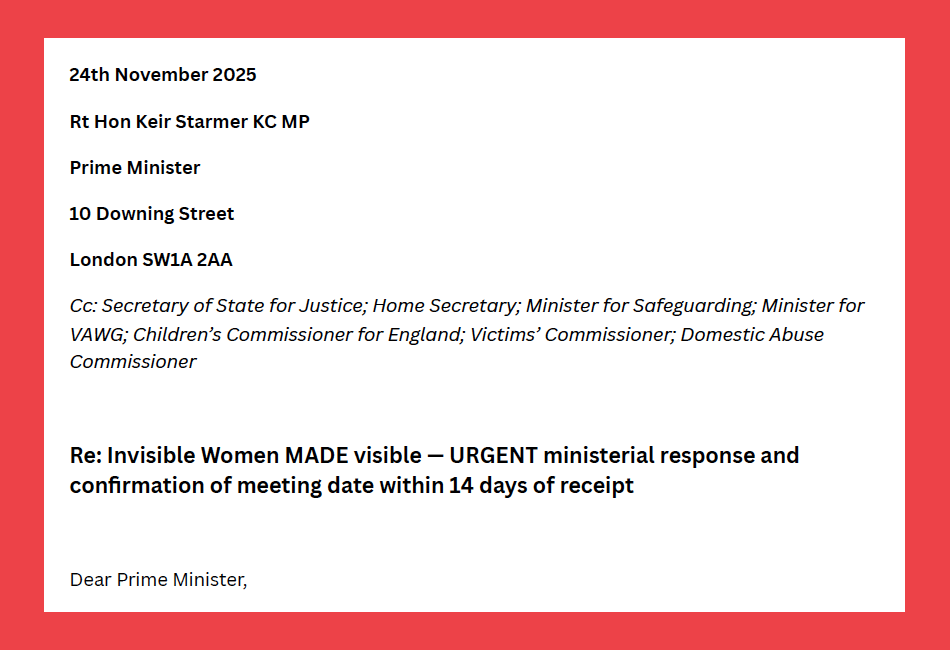
24 November 2025. Killed Women's response to the shocking Independent Office for Police Conduct (IOPC) findings into police failings surrounding the death of Harshita Brella in November 2024.
Following the IOPC statement today (https://bbc.co.uk/news/articles/c1m89d0jjplo), our Killed Women bereaved families—supported by the Invisible Women campaign, Killed Women and Southall Black Sisters—are requesting an URGENT meeting with the Government to progress discussions and take forward the recommendations set out in our recent research report ‘Invisible Women “Made Visible”: Learning from the Femicides of Black, Minoritised and Migrant Women’ (https://killedwomen.org/invisible-women).
-

RSE to 18: 'Make It Mandatory' Petition
Faustine Petron, who started the Make It Mandatory campaign for increased relationship education, was herself a victim of domestic abuse before her ex boyfriend was sent to jail. Her campaign says Relationships and Sex Education (RSE), which is already taught in primary and secondary schools, should be extended to colleges and sixth forms. Over 105,000 people have signed her petition, which was delivered to Downing Street on 16 June.
Killed Women co-founder Carole Gould, whose 17-year-old daughter Ellie was stabbed to death by a fellow student at her school (also 17 at the time) after she ended their relationship of three months, helped to deliver Faustine's petition as an expression of KW’s support for the campaign.
For more information about the campaign and to sign the petition, please see Faustine’s page on Change.org: ‘Ask the government to help prevent domestic abuse through education‘
-

DHP Report
The Domestic Homicide Project was established by police and government in England and Wales to collect, review, and share quick time learning from all police-recorded domestic homicides, unexpected deaths and suspected suicides of individuals with a history of Domestic Abuse victimisation.
The Project’s Year 4 Report has recorded 1,012 deaths since 1 April 2020 (to 31 March 2024). These include: 501 domestic homicides (332 intimate partner homicides and 169 adult family homicides); 354 suspected victim suicides following domestic abuse; 71 unexpected deaths; 61 child deaths; 25 deaths classified as ‘other’ (such as lodger/flatmate). 262 deaths were recorded in Year 4 (1 April 2023 to 31 March 2024).
Intimate partner homicides have remained relatively stable over the course of the 4 years of data collection, highlighting the need for government to take action to prevent these deaths from happening.
For the second year running, deaths by suicide among victims of domestic abuse surpassed the number of people killed by an intimate partner.
Analysis into deaths where someone had fallen from a height is presented too, carried out in collaboration with Killed Women. 22 cases were recorded in this category with 20 of the suspects (of 23) recorded as being in an intimate relationship with the victim.
Greater awareness of the link between suicide and domestic abuse, plus revised guidance related to unexpected deaths is more likely to explain the increase in numbers rather than an empirical rise in cases.
However, as National Police Chiefs' Council Lead for Domestic Abuse Louisa Rolfe recognises, a step up in police investigations is needed so that domestic abuse is always a key line of inquiry. -
International Women's Day 2025
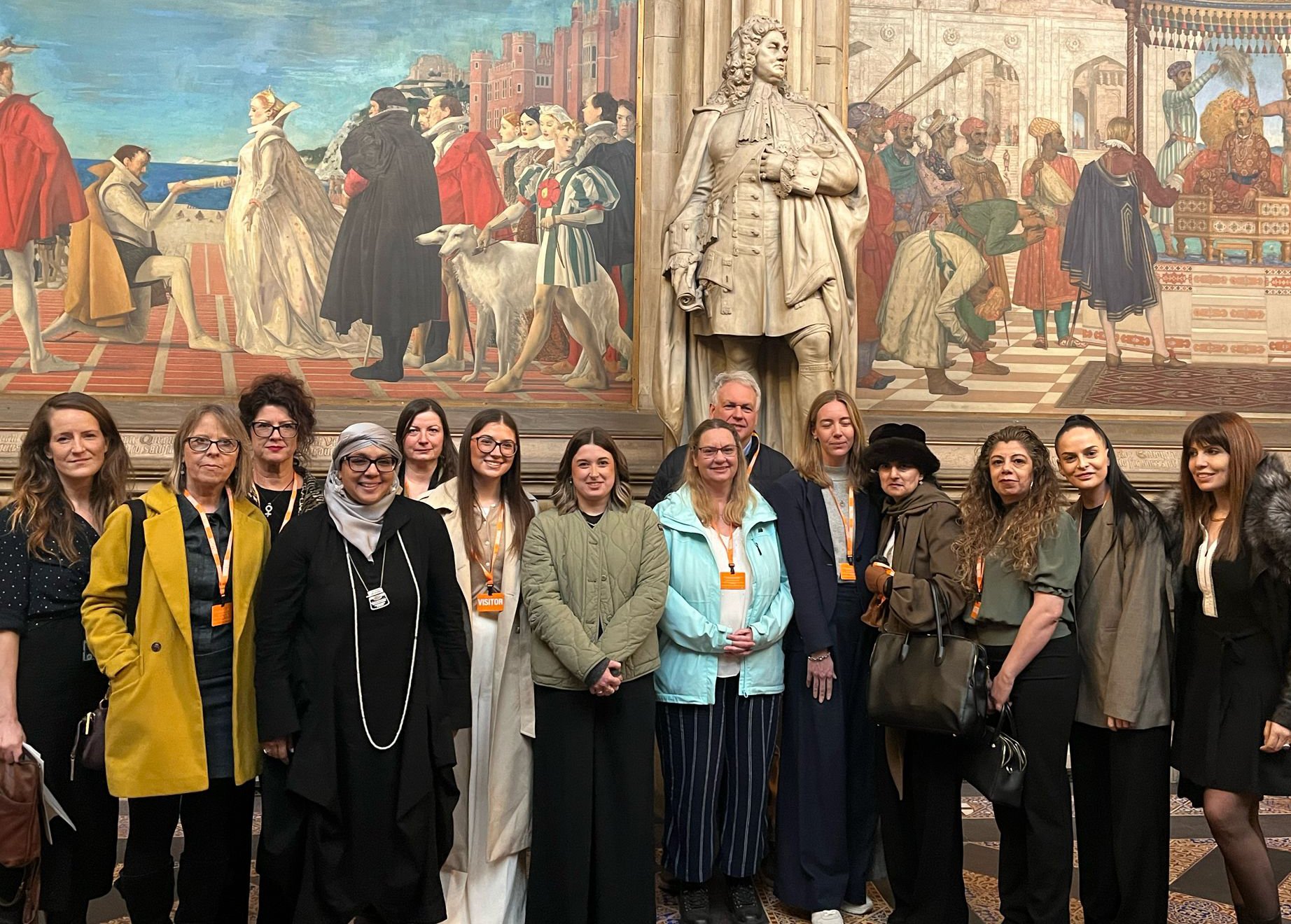
On Thursday 6th March Killed Women were at Westminster to hear Jess Phillips MP read out the names of the 95 women and girls known to have been killed by a man in the past twelve months, as she has done for the past ten years, to mark International Women's Day.
Yesterday she did so for the first time from the front benches as a Home Office Minister. In another first she also recognised the women whose names do not make it onto the list:
"We remember the list of women who died from suicide, or in unclear, sinister and hidden circumstances where we know there was a history of domestic abuse or sexual violence. Those women's names will not make it on to this list, because nobody has ever been held accountable for their deaths. Today I promise that we are working on these hidden homicides. They deserve better. They deserve justice."
-

Justice For Our Women: Black & Blue Plaques – 'Killed Here'
Killed Women’s Black & Blue Plaques: ‘Killed Here’ campaign, launched in December 2024, calls on the new Labour Government to uphold the Conservatives’ commitment to change the outdated and misogynistic UK domestic homicide sentencing laws in support of murdered women and their families.
On average, in the UK perpetrators who kill in the home using a weapon kept in the home receive a sentence with a minimum prison term (starting tariff) before being considered for parole, of around ten years less than those killed out of home, due to out-of-date laws.
One woman is killed by a man every three days in the UK - and in most of these cases they are murdered by people they know, and the murders are generally horrific in nature and involve overkill. However, the final blow for families is often in the sentencing, when the criminal justice system deems their loved ones' lives are worth ten years less.
Killed Women calls for Sir Keir Starmer and Shabana Mahmood, the Lord Chancellor, to urgently include this crucial issue in the Government’s agenda.
“We want the symbolism of these plaques to raise this issue in the House of Commons. The Government showed a refreshing approach to the riots this summer and we want this issue to be granted the same attention, in honouring the pledges made by the previous Government. While this won’t bring our loved ones home, at the very least, families of future victims will be consoled by the knowledge that justice has been served.”
Each bespoke Black & Blue Plaque includes the woman's name, their life span, and then the words: 'Killed here', the sentence given, and 'Murder is murder, change the law'.
Read Press Reports
-

Fallen Women
March 2024. Killed Women’s Fallen Women campaign calls for the deaths of all women who have fallen from a height to be reviewed by police to identify whether domestic abuse may have been a feature.
We want official data collection to track the number of women who die after falling from a height each year, and believe that domestic abuse should be a key line of inquiry for police in all such cases.
Criminologist Professor Jane Monckton Smith estimates there are around 130 primarily female victims killed every year in England and Wales whose deaths are not investigated or prosecuted as homicides.
____________________
The campaign opening coincided with the Channel 4 documentary ‘The Push: Murder on the Cliff’, which follows the case of Fawziyah Javed, who died after being pushed off Arthur’s Seat in Edinburgh by her husband in 2021.
Fawziyah’s mother Yasmin, a member of the Killed Women network, said: ‘Domestic abusers will continue to get away with murder if we don’t ensure the cases of so-called fallen women are rigorously investigated by authorities. We must have a system that delivers justice for these women.’
‘The Push’ has won ‘Best Programme’ at the Asian Media Awards and ‘Best Documentary Series’ at the Grierson Awards. This telling of Fawziyah’s story has helped people leave abusive relationships and saved lives around the world.
-

YOU WERE TOLD: A Voice for Killed Women
During 2023, Killed Women and research organisation Ipsos conducted an anonymous survey for relatives of women killed by male violence.
The aim of the survey was to better understand the experiences of bereaved families and what changes must be made to ensure women are protected, families supported and justice delivered.
The findings from the survey have now been collated into a report (entitled ‘YOU WERE TOLD: A Voice for Killed Women’), published and shared with the public at our Westminster event on 5th December 2023, entitled The Final Protest.
Be a voice for Killed Women and demand change. Click on the button below to access the report – and send it to your MP.
-

Justice For Our Women: Murder Sentencing Consultation
This consultation, published by the Ministry of Justice, considered:
- raising starting points for killings with a history of coercive and controlling abuse or with a weapon;
- and whether murderers who use a knife or other weapon already at the crime scene should also face steeper starting points – which would result in higher minimum jail terms in these cases.
Julie Devey, Carole Gould and Elaine Newborough of Killed Women discuss these – and related – issues in a short film entitled
These three mothers of Killed Women were interviewed by Julie Etchingham for ITV’s Tonight programme on Thursday 22 February:
CONSULTATION CLOSED 4 MARCH 2024
The Ministry of Justice is now considering its response to the public consultation following 5,200 responses.
-

Contact numbers in a crisis:
-

Get in touch with us
We are reaching out to other families of women killed by men who might want to join the Killed Women network.
If you are a bereaved relative please email us at info@killedwomen.org for more information or click on the button below.
-
Donate
Your donation will help families elevate their voice and build this organisation, to create a legacy of change that ensures justice and protection for women in the future.